Cliff Top Temples to Visit Near Uluwatu
By the siappergi.com team · Published · 11 min read

The cliff top temples near Uluwatu are some of the most dramatic sacred sites on Bali's Bukit peninsula, perched above the Indian Ocean with views that rival any in Indonesia. This guide covers which temples to visit, when to go, what to wear and how to reach them without stress.
Why the cliff top temples matter
Bali's Hindu temples are built with a clear logic: the sea is the realm of the lower gods, and temples on high ground face the ocean to honour the balance of the world. Nowhere is this more visible than on the limestone cliffs of the Bukit peninsula, where several *pura* (temples) sit metres above crashing waves. Visitors come for the views and the sunset, but these are working places of worship, and a little local knowledge makes the visit far more rewarding.
The main temples to visit
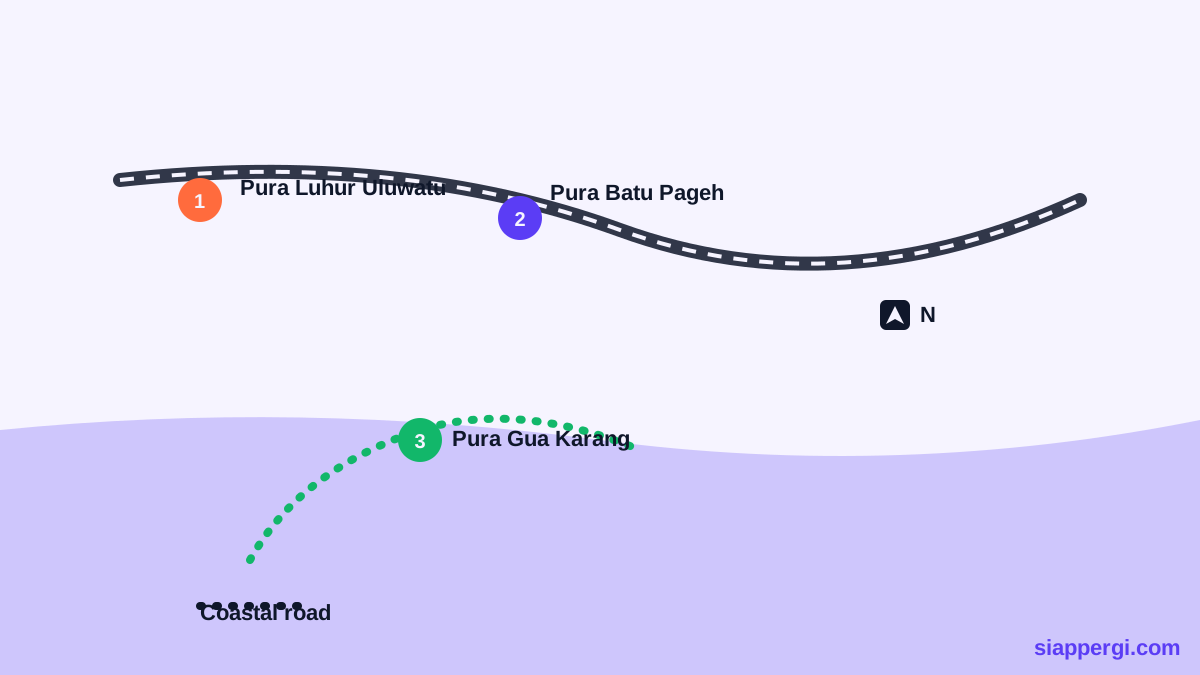
Pura Luhur Uluwatu
The headline site is Pura Luhur Uluwatu, traditionally linked to the priest Empu Kuturan and one of the *sad kahyangan*, the six great temples of Bali. It stands on a sheer cliff roughly 70 metres above the sea. Expect a steep walk through a forest of tall trees, where grey monkeys live and will happily take anything shiny or edible from unwary visitors. Keep sunglasses, hats and bags zipped and closed.
Pura Batu Pageh
A quieter alternative, Pura Batu Pageh sits on a rocky headland with an open view down the coast. It is less crowded than the main temple and a good choice if you want to take photographs without queues.
Pura Gua Karang (Pura Pantai Karang)
This small sea temple is built around a cave and tidal rock pools. It is best visited at low tide, when the surrounding reef is exposed. Check the tide chart before you go, and never climb onto slippery rocks during rough seas.
Smaller shrines along the cliffs
Along the coast road you will pass modest shrines, often marked with black-and-white checked cloth (*poleng*). Stop only where there is a clear place to park and do not enter areas that look private.

When to visit
- Late afternoon is the most popular time, with the best light for photography. Arrive by 3 pm to find parking and a good spot.
- Morning is calmer, cooler and far less crowded, ideal if you want to walk the forest path at a relaxed pace.
- Ceremony days can close parts of a temple or restrict entry. Check locally before you travel, and respect any signs.
Temple opening hours, entry fees and rules can change and are set by the temple community and local authorities. Check the latest information on arrival.
Dress code and etiquette
You must cover your legs and shoulders at every temple. Most temples provide a sarong and sash at the entrance, but bringing your own lightweight wrap saves time. Other practical points:
- Remove hats when you enter the inner courtyard, unless signs say otherwise.
- Do not touch offerings or sit on shrines.
- Keep voices low during prayers and never point your feet at altars.
- Ask before photographing people praying, and avoid using flash inside sacred areas.
- Dress modestly even in the car park, as the temple grounds begin there.
Getting there and getting around
The Bukit peninsula is spread out, and taxis and ride apps are less reliable on the cliffs than in the main towns. Renting your own transport gives you the freedom to stop at smaller sites and leave before the sunset crowds. A scooter is the most popular choice for short distances, and a self-drive car suits groups or anyone travelling with luggage.
For a flexible day around the peninsula, you can compare scooter rental options and car rental options. If you are staying in the south, pages for Uluwatu scooter rental, Jimbaran and Nusa Dua show local details. Prefer not to drive? Our car rental with driver service is available in Yogyakarta, YIA airport and Central Java, so check current options before you plan.
Combining temples with beaches and sunset
A good peninsula day might run like this:
| Time | Stop | Why |
|---|---|---|
| 08.30 | Pura Batu Pageh | Quiet morning views |
| 10.00 | Coast viewpoints | Photos before the heat |
| 13.00 | Lunch in Jimbaran or Nusa Dua | Seafood and shade |
| 15.30 | Pura Gua Karang at low tide | Tidal pools |
| 17.30 | Pura Luhur Uluwatu | Sunset and the Kecak timing |
Many visitors stay for the Kecak fire dance performed near the main temple in the evening. Performances are scheduled by local operators, so confirm times on arrival rather than relying on old listings.
Safety and practical tips
- Bring water, sun protection and closed shoes; the paths are uneven and rocky.
- Keep valuables out of sight, especially around the monkey areas.
- Do not feed the monkeys, which can bite.
- Leave the cliff edges alone: the rock is unstable and the drop is serious.
- Check your own licence and insurance needs before riding; rules are set by Indonesian authorities and can change.
Planning Your Temple Day Around Uluwatu
A good temple day near Uluwatu works best when you plan it as a loop rather than a series of separate trips. The cliff temples sit along the western edge of the Bukit peninsula, so the sensible order is to start at the most distant point and work back toward your base, which keeps you from doubling back on the same road in the afternoon heat.
A sample route (estimated timing)
| Time (WITA) | Stop | Estimated time on site |
|---|---|---|
| 07.00–08.00 | Leave your base (Kuta, Seminyak, Canggu or Jimbaran) | Travel time depends on traffic |
| 08.30–10.00 | Pura Batu Pageh and the smaller cliff shrines | 60–90 minutes |
| 10.30–12.00 | Pura Gua Karang (Pura Pantai Karang) | 60–90 minutes |
| 12.00–13.30 | Lunch at a warung near the cliffs | 60 minutes |
| 14.00–17.30 | Pura Luhur Uluwatu, then beach or cliff walk | 2–3 hours |
| 17.30–18.30 | Sunset and the ride back | Plan to be on the road before dark |
These timings are estimates for planning only. Peak traffic on the Uluwatu road can add a significant amount of time, so leave a buffer of at least one hour.
Common mistakes to avoid
- Visiting Pura Luhur Uluwatu at midday only. Monkeys are most active when the day is hot and crowds are large. Go in the late afternoon if you want quieter paths.
- Ignoring the hotel room safe. Leave passports, valuables and spare cash at your accommodation. Monkeys near the temple take sunglasses, phones and bags.
- Wearing the wrong shoes. The cliff paths are uneven and sometimes steep. Flip-flops are fine for the temple courtyard but sandals with a grip are better for the walk.
- Trusting the map blindly. Some shrines are small and hard to find. Check directions the day before and carry a downloaded offline map.
- Forgetting that the cliffs face the sun. Few spots offer shade. Bring a hat, water and sun protection.
Checklist Before You Leave
- [ ] Sarong and sash (or a long skirt or trousers that cover the knees)
- [ ] Modest top that covers the shoulders
- [ ] Sunscreen, hat and sunglasses on a strap
- [ ] At least 1.5 litres of drinking water per person
- [ ] Small cash in Indonesian Rupiah for donations and parking
- [ ] Phone with offline map and charged power bank
- [ ] Light rain jacket (weather changes quickly on the cliffs)
- [ ] Valid driving licence and the vehicle paperwork if you ride
- [ ] Your accommodation's contact number and the WhatsApp numbers for your rental
Frequently Asked Questions
Do I need to book a temple entry in advance?
Most of the cliff temples are open to visitors without advance booking. Pura Luhur Uluwatu is the one most visitors plan around because of its evening Kecak performance, which is ticketed and sold at the site. Check the current price and schedule on arrival, as these can change.
Can I visit the temples with children?
Yes, but the cliff edges and steep steps need supervision. Keep small children close to you at all times, especially near the drop-offs and at the monkey areas.
Is it safe to ride a scooter to the temples?
The road to Uluwatu is busy and can be steep and winding. Only ride if you hold a valid motorcycle licence and are comfortable with traffic. Foreign visitors need their home licence together with an International Driving Permit that includes the motorcycle category. Requirements are set by the Indonesian authorities and can change, so confirm them before you travel.
Can I hire a driver for the day instead?
Yes. A car with a driver is a relaxed way to cover several temples in one day, and you avoid parking problems. SiapPergi's car rental in Bali is self-drive, so for a driver-led day you should ask the team on WhatsApp about options for your route.
How SiapPergi Fits Into Your Day
SiapPergi delivers scooters and cars to your hotel, villa or the airport. Delivery is free to Ngurah Rai Airport, Kuta, Legian and Seminyak, while Jimbaran, Nusa Dua and Canggu carry a return fee as listed in our catalogue. Scooters from Rp70.000 per day and cars from Rp310.000 per day come with no deposit (big bikes excepted), and you pay in Indonesian Rupiah on delivery. Book on WhatsApp at 0818-0800-1102 between 07.00 and 23.00 WITA, in English or Indonesian, and tell the team your dates and delivery address. For the full range of models, see scooter rental and car rental.
Choosing Your Temple Order Around Uluwatu
Most visitors try to fit two or three temples into a single afternoon, and the order matters. Starting with Pura Batu Pageh and finishing at Pura Luhur Uluwatu lets you end near the cliff edge as the light softens, which is when the views are at their best. If you are staying in Kuta, Legian or Seminyak, the drive south to the peninsula takes longer than many expect, so plan the outbound trip as one block and the return as another rather than zig-zagging between points.
Keep in mind that temple visits are not a race. Each site rewards at least 45 minutes to an hour, and the monkeys near Pura Luhur Uluwatu can take up more of your attention than you planned. Build in buffer time before any evening commitment.
Practical Timing and Cost Estimates
The figures below are rough planning estimates for a single day, not quoted rates. Entrance fees, parking and donation expectations change, so check locally on arrival.
| Item | Rough planning estimate | Notes |
|---|---|---|
| Temple donation or entry | Varies by site | Usually a small voluntary or fixed amount per person |
| Sarong and sash | Often included or cheap to borrow | Bring your own if you want a better fit |
| Scooter rental (SiapPergi) | From Rp70.000/day | Delivery free in Kuta, Legian, Seminyak and the airport |
| Car rental (SiapPergi) | From Rp310.000/day | Useful for groups or rainy days |
| Half-day visit total | Plan for 3 to 4 hours | Includes travel time from central Bali |
Scooter and car prices are the fixed catalogue rates. Return delivery to Uluwatu costs IDR 100,000, and this is worth factoring in if you rent from a central location and plan to drop the vehicle off near the cliffs.
Common Questions About the Day
Can I see the temples on a rainy day?
Yes, but expect slippery paths and reduced views. Wear closed shoes with grip, carry a plastic raincoat (IDR 10,000 each through SiapPergi if you rent with us), and check the forecast before setting out. Heavy rain can make the cliff paths unpleasant, so be ready to change plans.
What should I bring in my bag?
- Water and a light snack
- Sunscreen and a hat, since shade is limited at the cliff sites
- A small umbrella or raincoat
- Cash in small notes for donations and parking
- A phone holder or power bank if you plan to take many photos
Do I need to speak Indonesian?
No. English is widely understood at tourist sites, and a temple guardian or local guide can explain the customs if you ask politely. A few words of Indonesian such as "terima kasih" (thank you) are always appreciated.
Keeping the Day Respectful and Smooth
Temples are active places of worship, not just viewpoints. Avoid climbing on walls or shrines, keep voices low during ceremonies, and step aside when local families are praying. If a ceremony is taking place, follow the lead of local worshippers about where to stand.
Watch your belongings near the monkeys. Keep sunglasses, hats and food packed away, and do not offer them food. If a monkey takes something, it is usually best to stay calm and wait for a staff member to help rather than chasing it.
How SiapPergi Helps With the Logistics
SiapPergi's local team delivers scooters and cars to your hotel, villa or Ngurah Rai Airport, and handles the return at your chosen spot. For a temple day, the simplest arrangement is to have the vehicle delivered in the morning, pay on delivery in Indonesian Rupiah, and return it at your final stop. Bookings are made on WhatsApp at +6281808001102 (07.00–23.00 WITA) or by email at halo@siappergi.com, and no deposit is required for regular scooters or cars.
How SiapPergi helps
SiapPergi delivers scooters and cars to your hotel, villa or Ngurah Rai Airport, with free delivery to Kuta, Legian and Seminyak. For areas further south, a return delivery fee applies: Jimbaran IDR 60,000, Nusa Dua and Canggu IDR 80,000, Uluwatu IDR 100,000 return; other areas can be arranged on WhatsApp. Catalogue prices start from Rp70.000 per day for scooters and Rp310.000 per day for cars, with 2 helmets included with every scooter. Regular scooters and cars need no deposit, your passport is not held, and you pay in Indonesian Rupiah when the vehicle arrives. Book on WhatsApp +6281808001102 (07.00–23.00 WITA) or email halo@siappergi.com.
Ready to rent a scooter or car?
Fixed catalogue prices, delivered to your hotel or villa. Book on WhatsApp and pay when the vehicle arrives.
Published on the SiapPergi blog. Scooter & car rental, cars with driver, tickets and stays: siappergi.com.
This guide follows the SiapPergi editorial policy: facts are checked, market prices are given as ranges and mistakes are corrected.